Sound familiar?Ridgeville
- The call
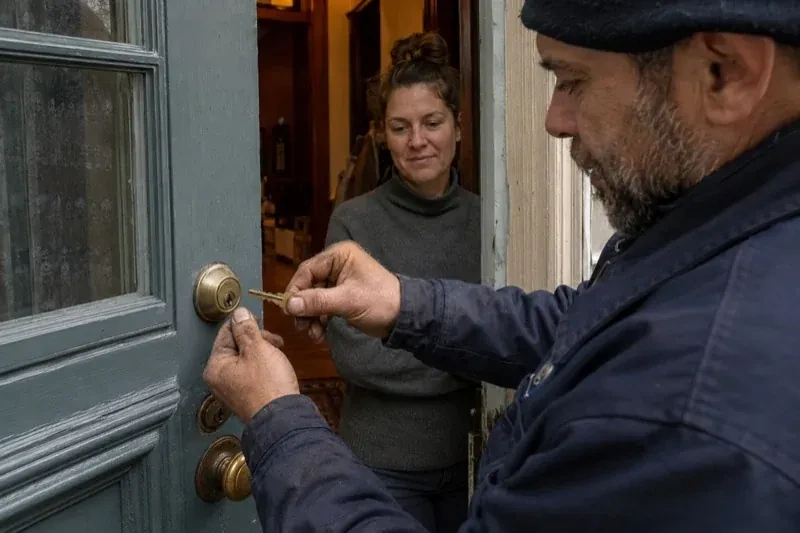
- The shop's lever handle goes down as usual, but the latch inside the mortise case never pulls back. Staff are waiting on the sidewalk with their coffees, the door is locked, and the handle is simply moving air.
The shop's lever handle goes down as usual, but the latch inside the mortise case never pulls back. Staff are waiting on the sidewalk with their coffees, the door is locked, and the handle is simply moving air.
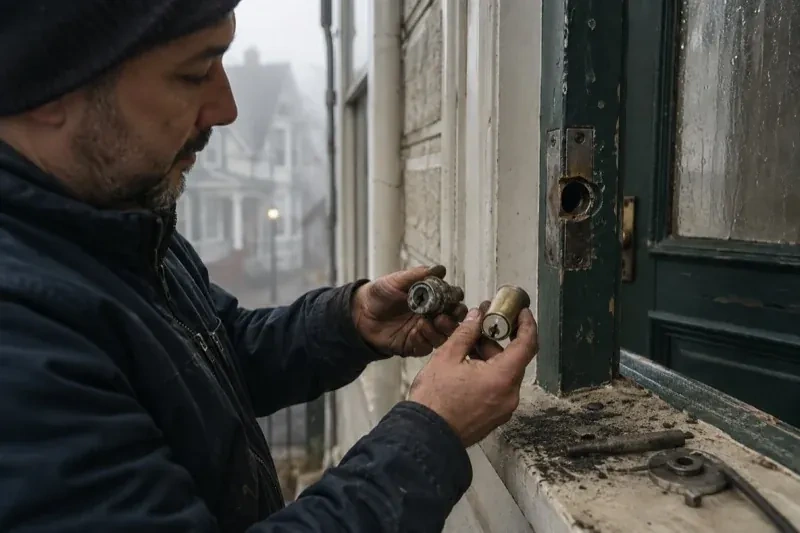
When the cylinder is the part that has seized, the work is about cleaning rather than force. Keyways collect dust, salt spray, metal filings and residue from sprays never meant for locks, and over time the pins stop lifting cleanly. The locksmith flushes the plug with a contact cleaner, applies a penetrating lubricant, and works the key in small movements until the plug turns. With the door open the cylinder comes out, is stripped and cleaned, gets fresh springs or pins where worn, and is dressed with the lubricant specified for that cylinder. A plug or shell that is worn, damaged or eaten through by corrosion is what gets replaced.
Sound familiar?Ridgeville
Seized & Jammed Lock Opening · Ridgeville
Scene 1
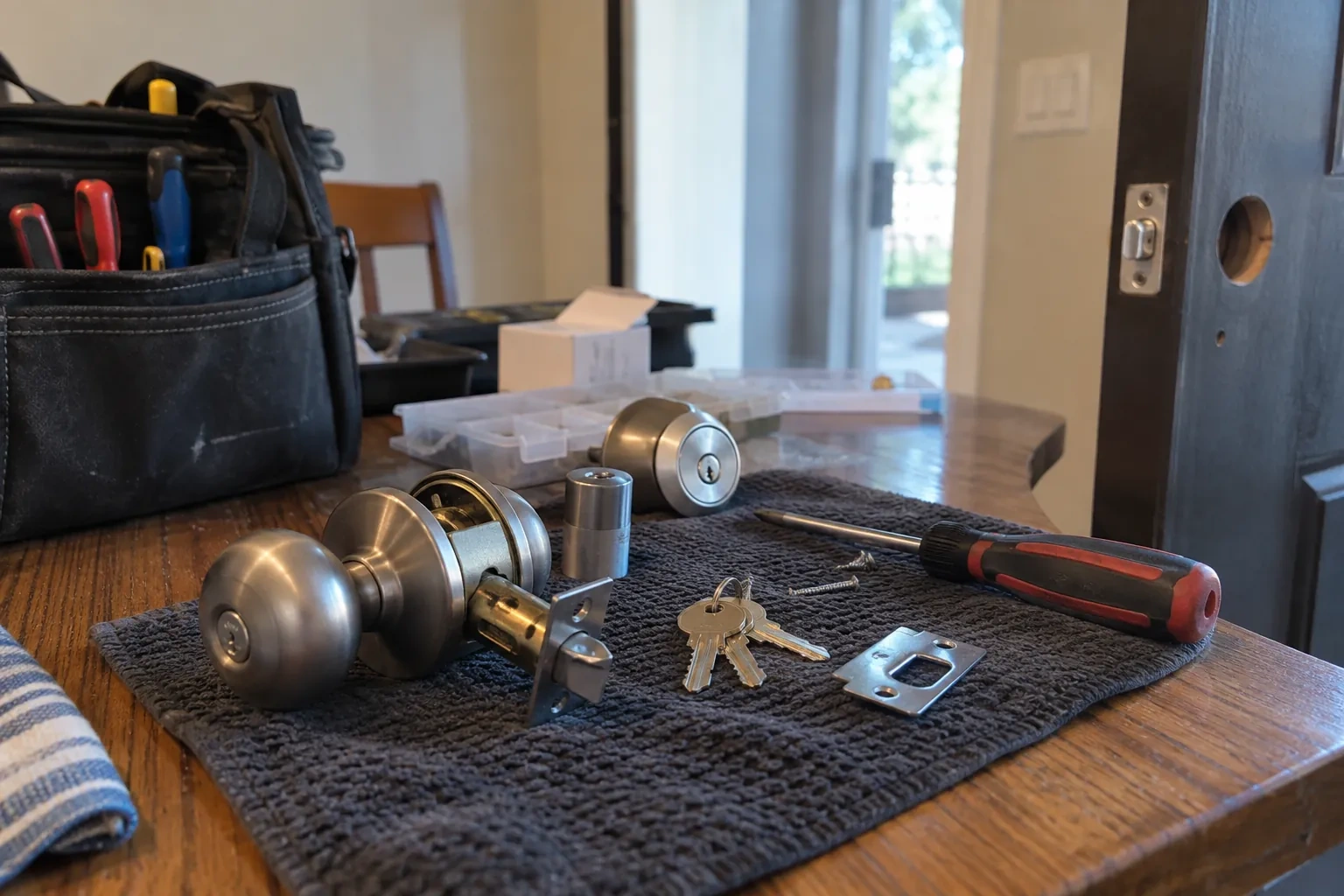
A small mirror and a bright light show what the keyway has collected. Salt crust, sand, metal filings, sawdust from a renovation and the gummy residue of household spray oils are all common, and each reads differently: a dry gritty feel, a sticky drag, or a plug that will not accept the key to full depth. Ice shows as frost on the cylinder face and a key that stops short. A cylinder cap that has loosened lets the plug sit crooked so the pins never line up. This look decides whether the cylinder needs a flush and dry lubricant, a thaw, a re-tightened cap, or a full strip on the bench.
Scene 2
A key that spins freely means the cylinder is fine and the bar behind it, the tailpiece or cam, has broken, slipped or twisted out of engagement. The bolt is then retracted directly through the mechanism rather than through the cylinder, or the cylinder is withdrawn so the locksmith can reach the bolt drive. Once the door is open the old tailpiece is removed and a replacement of the correct length and profile is fitted, since one that is too short repeats the fault and one that is too long binds. The cylinder goes back, the retaining screws are checked, and the bolt is thrown and retracted with the key until it moves cleanly through its full travel.
Scene 3
On a commercial door the handover includes the people who use it. Whoever opens in the morning is shown how the lever, key and cylinder now behave, and the exit side is demonstrated so everyone knows the door opens from inside with one motion. If the mortise case was serviced, the parts that were replaced are named so a future locksmith knows what is in there. A note of which keys were tested and who holds them supports whatever key control the business runs. Spare keys are checked in the lock before they go back in the safe.
What shapes the quoteMaple Park Locksmith Co.
FeesSame any hour
The face of a building that never sees direct sun stays colder and damper, so ice in a keyway lasts days longer there and condensation sits in the cylinder rather than drying off. Wind-driven rain and snow tend to hit the same face. Those doors deserve a keyhole cover, a storm door where one fits, and a lubricant check before the season turns, and they are often the first lock a locksmith asks about.
Two reasons meet in the same season. Freeze-thaw weather sends meltwater into the keyway by day and freezes it by night, and cold thickens any old grease or oil that has been sprayed into the pins. At the same time dry, heated indoor air shrinks wood doors so bolts move in their pockets. Doors on the shaded or windward side get the worst of it. A dry lubricant, a keyhole cover and a check of the strike after the first hard frost take care of most of it.
The tailpiece is the flat bar that sticks out of the back of a deadbolt cylinder and turns the bolt mechanism when the key turns; on a knob or lever set the equivalent part is a cam or spindle. It carries all the twisting effort, so a bent, worn or broken one is the reason a key can turn without anything happening. It is a small part to replace, it comes in several lengths, and the right length matters.
NiagaraOntario
Seized & Jammed Lock Opening · Welland, Pelham, Crowland, Maple Park, Stop 19, Welland South, Fonthill, Kunda Park, Fenwick
Every square is one home in a hundred.
On-site assessment
The shop's lever handle goes down as usual, but the latch inside the mortise case never pulls back.
(365) 364-0824, open 24/7.
On-site assessment preferred · (365) 364-0824, open 24/7