Sound familiar?Welland
- The call
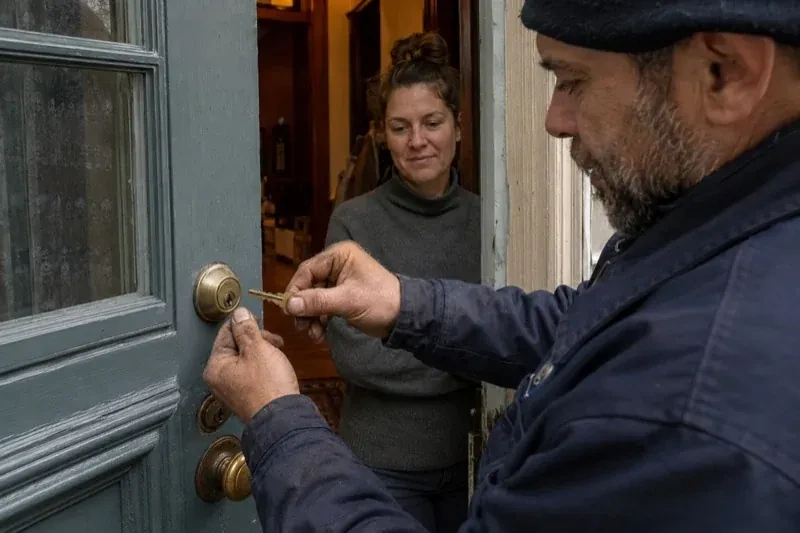
- It is the coldest morning of the winter and the key goes halfway into the side door and stops. There is frost on the face of the cylinder, and the door on the shaded side of the house has done this before.
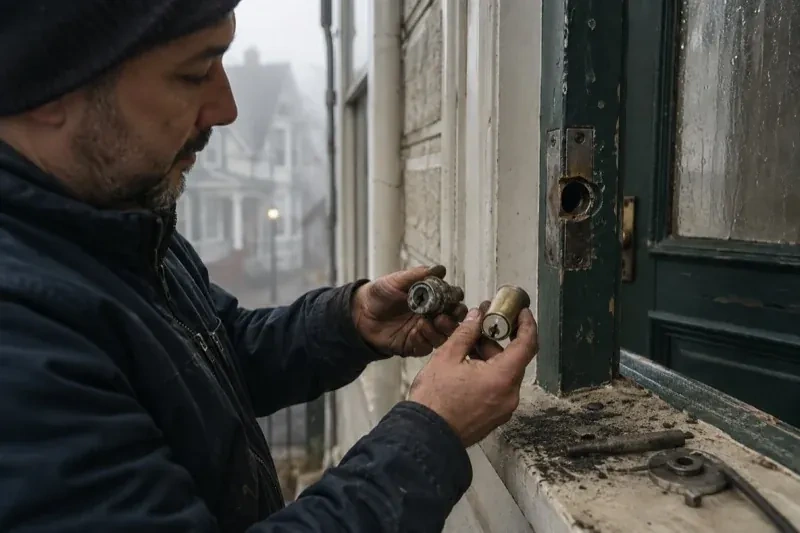
The shop's lever handle goes down as usual, but the latch inside the mortise case never pulls back. Staff are waiting on the sidewalk with their coffees, the door is locked, and the handle is simply moving air.
Most seized locks can be saved, and keeping your existing hardware is the aim. A cylinder that has stopped turning is usually recoverable with cleaning and fresh internal parts. A failed tailpiece is a small component swapped without touching the rest of the lock. A bolt bound by the door needs adjustment, not new hardware. Replacement is the answer for a plug or shell that is worn, damaged or hollowed out by corrosion beyond what cleaning and parts can fix, and then the new cylinder is matched to your keyway and finish and, where possible, keyed to the key already in your pocket.
Sound familiar?Welland
Seized & Jammed Lock Opening · Welland
Scene 1
Before blaming the lock, the locksmith looks at the key. A key that has been copied from another copy several times drifts away from the true cuts, a worn key no longer lifts the pins to the shear line, and a bent key binds before it is fully seated. If an original or a rarely used spare exists, it is tried; a lock that opens with the spare has told you the problem. Some cylinders also retain the key until the plug is returned to its neutral position, and a key that seems trapped may simply be a plug that has not come back. A fresh key cut from the code is a common outcome.
Scene 2
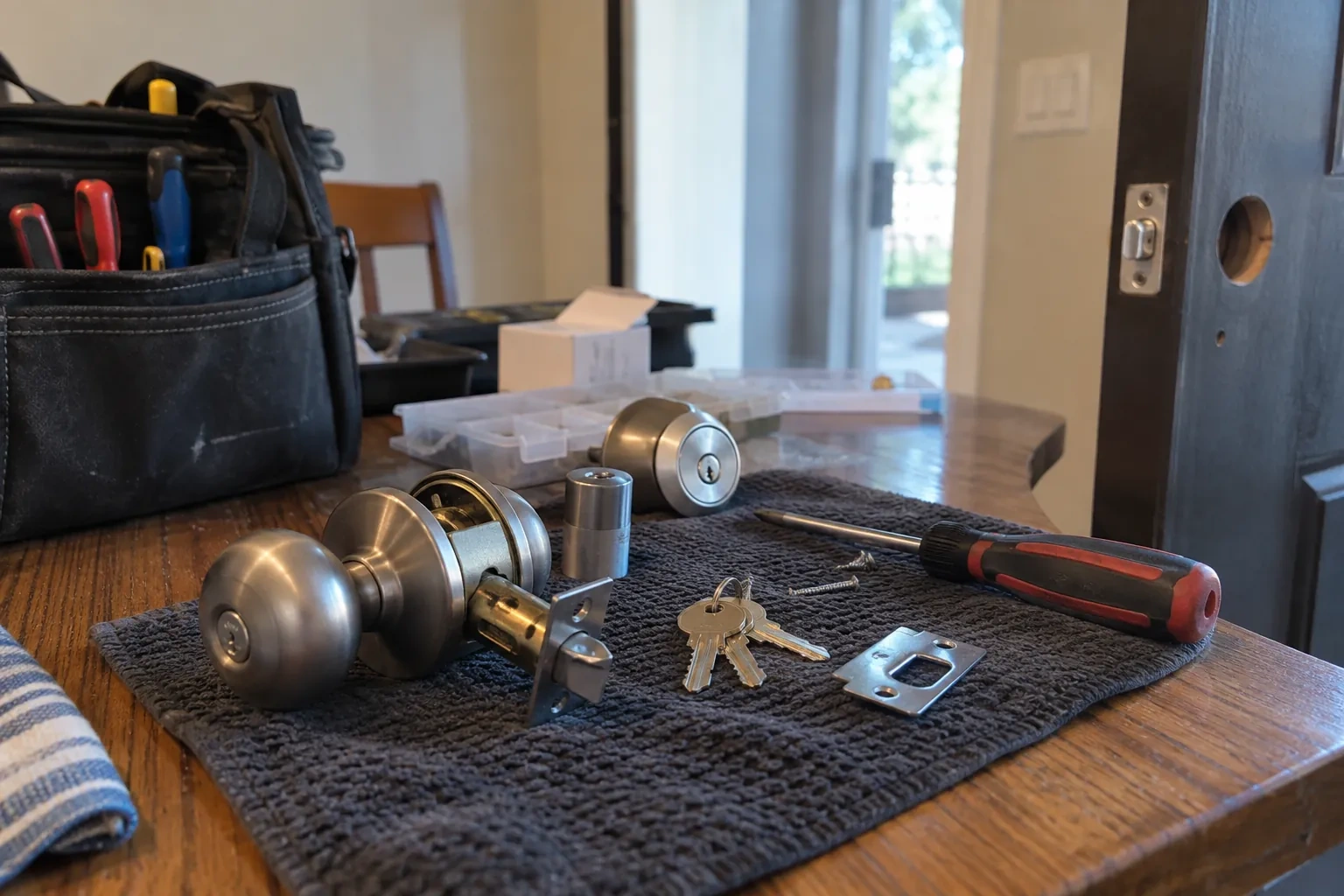
For mortise locks and lever hardware the work moves from the cylinder to the case. The locksmith gets the door open, then removes the trim and draws the case out of the door edge. Inside, a broken lever return spring, a worn hub, a bent spindle or a latch that has lost its spring is replaced with the matching part, and years of dust and hardened grease are cleaned from the contact surfaces before a fresh application of a grease suited to lock mechanisms. The case is reassembled, the spindle and cylinder are refitted, and lever, key and thumb-turn are each tested so the latch and bolt travel fully.
Scene 3
A serviced cylinder stays that way with very little effort. At the interval and with the product that cylinder's maker specifies, a short burst of lock lubricant into the keyway followed by a few turns of the key is enough; stay with that one product, since mixing lubricants makes a paste. Household oils, penetrating sprays and silicone meant for hinges belong nowhere near the pins, because they thicken and attract grit. Wipe the key before it goes in on a muddy or salty day. If the lock ever starts to drag, a puff of lubricant is the first response, and a call is the second.
What shapes the quoteMaple Park Locksmith Co.
FeesSame any hour
The face of a building that never sees direct sun stays colder and damper, so ice in a keyway lasts days longer there and condensation sits in the cylinder rather than drying off. Wind-driven rain and snow tend to hit the same face. Those doors deserve a keyhole cover, a storm door where one fits, and a lubricant check before the season turns, and they are often the first lock a locksmith asks about.
Two reasons meet in the same season. Freeze-thaw weather sends meltwater into the keyway by day and freezes it by night, and cold thickens any old grease or oil that has been sprayed into the pins. At the same time dry, heated indoor air shrinks wood doors so bolts move in their pockets. Doors on the shaded or windward side get the worst of it. A dry lubricant, a keyhole cover and a check of the strike after the first hard frost take care of most of it.
The tailpiece is the flat bar that sticks out of the back of a deadbolt cylinder and turns the bolt mechanism when the key turns; on a knob or lever set the equivalent part is a cam or spindle. It carries all the twisting effort, so a bent, worn or broken one is the reason a key can turn without anything happening. It is a small part to replace, it comes in several lengths, and the right length matters.
NiagaraOntario
Seized & Jammed Lock Opening · Pelham, Crowland, Maple Park, Stop 19, Welland South, Fonthill, Kunda Park, Fenwick, Ridgeville
Every square is one home in a hundred.
On-site assessment
The shop's lever handle goes down as usual, but the latch inside the mortise case never pulls back.
(365) 364-0824, open 24/7.
On-site assessment preferred · (365) 364-0824, open 24/7